
Blackmont
Portfolio Builder
The ETF Screener and Optimization Tool provides a comprehensive and interactive section for analyzing and constructing ETF portfolios with precision. The screener enables users to filter ETFs based on critical metrics such as asset class, volatility, returns, and expense ratios, offering a detailed overview of available investment options.
The optimization feature employs advanced algorithms to create efficient portfolios tailored to specific risk and return objectives. By integrating key factors like diversification and performance tracking, this tool supports informed decision-making for a wide range of investment strategies.
With clear visualizations and robust analytical capabilities, the tool facilitates the comparison of ETF performance and risk profiles, empowering investors to identify opportunities and mitigate risks effectively. Whether for professional or personal use, the ETF Screener and Optimization Tool streamlines the process of portfolio management and optimization.
1. ETF Universe Overview:
This section utilizes a meticulously curated selection of Exchange-Traded Funds (ETFs) that spans a wide range of asset classes and investment objectives. The dataset includes ETFs from categories such as equities, fixed income, commodities, alternatives, currencies, and asset allocation strategies, ensuring comprehensive market coverage. These classes encompass diverse exposures, from broad market indices and sector-specific funds to thematic investments targeting innovation, sustainability, and emerging industries.
To identify the most suitable ETFs for investors, several critical factors are evaluated beyond traditional metrics such as volatility, returns, and Sharpe ratios. These include:
- Cost Efficiency: Expense ratios are carefully analyzed to ensure that the selected ETFs deliver value without unnecessary fees, allowing investors to maximize net returns.
- Market Tenure: ETFs with a proven track record and several years in the market are prioritized, ensuring reliability and consistent performance over time.
- Liquidity and AUM: High trading volumes and significant assets under management (AUM) are key indicators of an ETF's market efficiency and investor confidence.
- Performance Consistency: Historical data is scrutinized to identify ETFs that demonstrate stability and resilience across varying market conditions.
By integrating these factors, the tool offers a refined selection of ETFs that balance risk, return, and cost-effectiveness. This approach not only supports informed decision-making but also empowers investors to construct portfolios tailored to their specific objectives, whether they aim for growth, income, or diversification.
The ETF universe is dynamically updated to include the latest market offerings and ensure that investors have access to innovative strategies and emerging opportunities. With this robust framework, the platform serves as a reliable tool for navigating the ever-expanding world of ETFs.
2. Top ETFs per level of risk:
Analyzing ETF Performance: Insights and Strategic RecommendationsThis article delves into the performance metrics of selected Exchange Traded Funds (ETFs), focusing on key indicators such as return, volatility, Sharpe ratio, and expense ratio. With growing interest in diversified investment portfolios, understanding these metrics will help investors navigate the ETF landscape effectively.
Analyzing sector trends, the Technology and Corporate Bond categories exhibit distinct patterns. ETFs like IGN have capitalized on technology sector growth, while BBCB benefits from stability in the bond market. Notably, the volatility of technology ETFs often attracts more aggressive investors, while conservative portfolios may prefer stable bond options.
Data analysis reveals notable relationships among the ETFs based on return and volatility. For example, the XHYI ETF, which focuses on high-yield industrial bonds, has shown higher returns compared to many peers while maintaining moderate volatility. On the other hand, the BBCB Corporate Bond ETF, while more stable, has lower returns, highlighting the classic risk-reward tradeoff.
The diverse categories of ETFs, such as Corporate Bonds, Large Growth, and Defined Outcome ETFs, showcase varying performance profiles, emphasizing the need for a tailored approach depending on investor risk tolerances and objectives.
In examining performance metrics, BBCB stands out as a leader in stability with an expense ratio of just 0.0004, which can contribute to higher net returns for investors focused on long-term gains. Conversely, the FSGS ETF showcases potential underperformance with an unclear expense structure, suggesting the need for investors to be cautious.
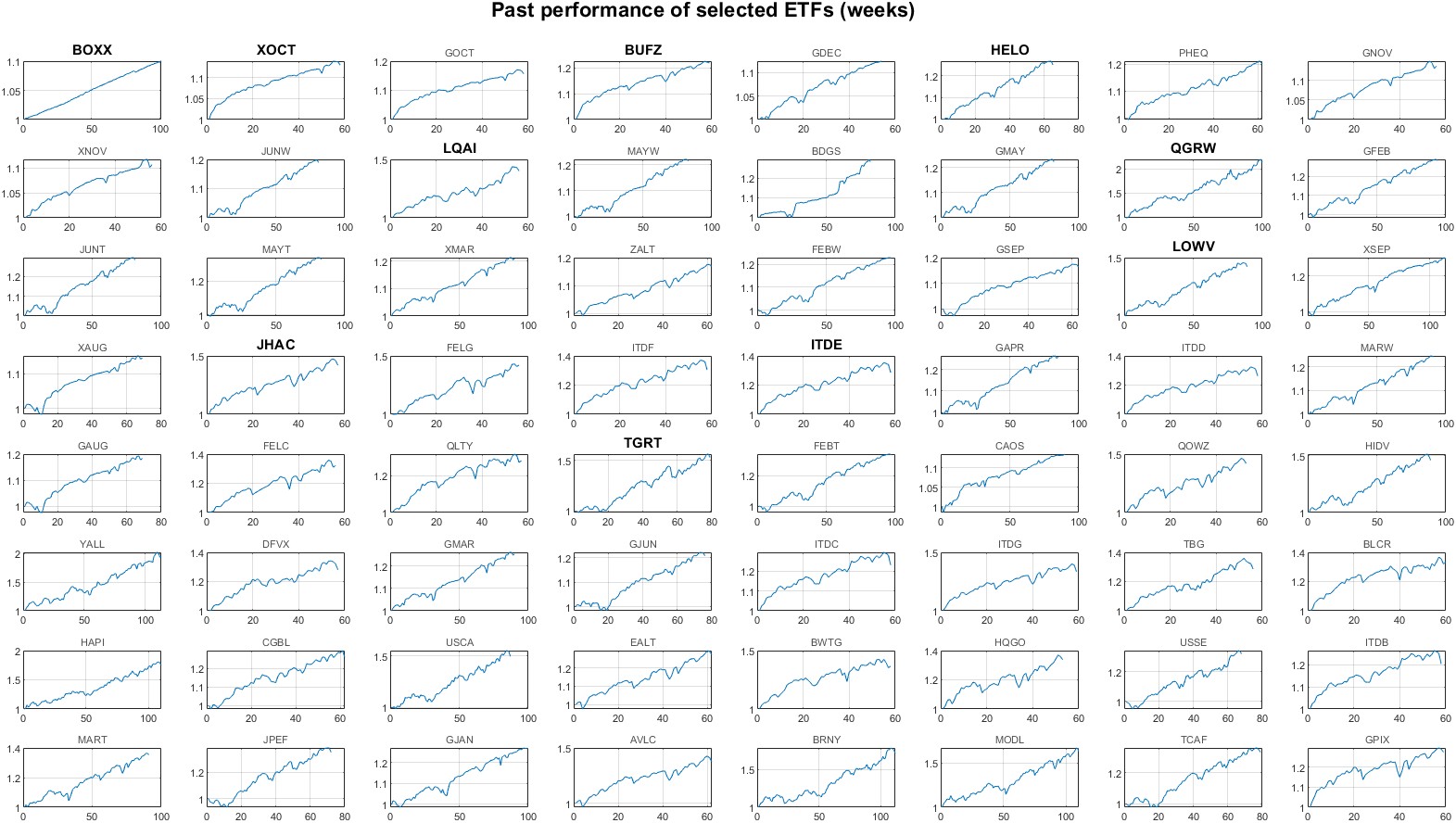
In conclusion, understanding the dynamics between return, volatility, and expense ratios among ETFs provides investors with critical insights for making informed decisions. As market conditions continue to fluctuate, carefully constructing an ETF portfolio that captures potential opportunities while managing risks is essential for achieving investment success.
3. Optimal Portfolios:
To build a balanced ETF portfolio, consider the following strategic recommendations:
- Diversification: Include both high-growth and stable, income-generating ETFs.
- Expense Ratio Consideration: Favor funds with lower expense ratios to maximize net returns.
- Monitor Volatility: Assess the volatility of ETFs against their expected returns and adjust holdings accordingly.